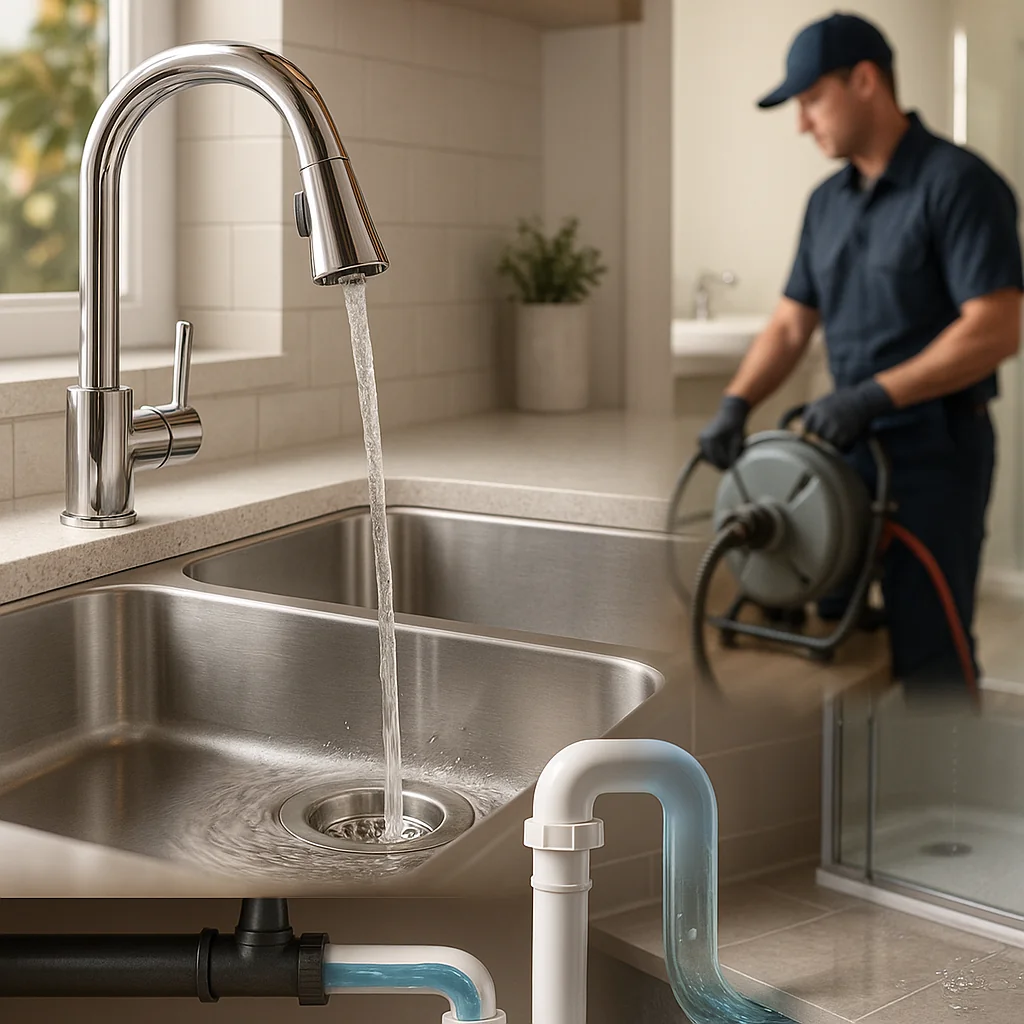
How to Keep Kitchen and Bathroom Drains Flowing Smoothly in Georgia Homes
For Dalton homeowners the best way to keep kitchen and bathroom drains flowing smoothly is a mix of smart daily habits routine maintenance and timely professional drain cleaning before a small buildup turns into a full blockage. Georgia homes deal with grease soap scum humidity hard water residue and seasonal debris so drains need a little extra care to stay clear and odor free.
Why drains clog so often in Georgia homes
Kitchen and bathroom drains handle more than water. In many Dalton homes they also collect grease food scraps hair toothpaste soap residue and mineral deposits. Georgia humidity can make grime cling to pipe walls and summer storms can add extra strain to outdoor and sewer systems. Over time those materials narrow the pipe opening and slow drainage.
Older homes in Whitfield County and surrounding communities may also have aging plumbing with rough interior pipe surfaces where buildup grabs more easily. Even newer homes are not immune because modern cooking oils wipes and heavy beauty products can create stubborn blockages. Understanding what is going down the drain is the first step toward keeping everything moving freely.
Kitchen drain habits that prevent buildup
The kitchen sink is one of the biggest sources of drain problems because grease and food waste can harden inside pipes. A few simple habits can prevent most kitchen clogs.
- Never pour grease down the sink. Let it cool and dispose of it in the trash in a sealed container.
- Scrape plates before washing. Small food particles are easier to trap in pipe walls than many homeowners realize.
- Use a sink strainer. It catches bits of rice pasta vegetable peelings and other debris before they enter the drain.
- Run hot water after washing dishes. This helps move light residue through the line before it settles.
- Avoid flushing coffee grounds. They do not dissolve easily and can combine with grease to form a dense clog.
If you notice the sink draining slower after cooking with oils or frying foods that is a warning sign that buildup is already forming. At that stage a safe cleaning routine can help but deeper obstructions may need high pressure drain jetting service to restore the pipe fully.
Bathroom drain habits that reduce hair and soap scum
Bathroom drains usually clog because of hair soap and grooming products. The problem is gradual which makes it easy to ignore until the tub or sink starts draining in a shallow pool of water.
- Use hair catchers in showers and tubs. These inexpensive tools stop the most common cause of bathroom clogs.
- Wipe excess toothpaste and shaving cream into the trash. Thick residues can collect in sink traps.
- Keep wipes out of toilets. Even products labeled as flushable can contribute to sewer blockages.
- Clean sink stoppers regularly. Hair and slime often hide beneath them.
- Watch for slow drainage after baths. That is often the first visible sign of a developing clog.
Because bathroom buildup is often sticky and layered a standard plunger may only provide temporary relief. For recurring issues or deep line restrictions many Dalton homeowners benefit from emergency drain unclogging when the blockage needs fast professional attention.
Safe maintenance routines that help drains stay clear
Routine care works best when it is simple and consistent. The goal is to prevent small deposits from turning into a heavy blockage.
Weekly flush routine
Once a week run plenty of hot water through the kitchen and bathroom drains for several minutes. This can help move soft residue before it hardens. Avoid mixing chemicals because that can damage pipes and create fumes.
Monthly cleaning routine
Use a drain-safe cleaning approach such as a manufacturer approved enzyme cleaner or a gentle cleaning method recommended by a licensed plumber. Enzyme treatments are often helpful because they break down organic buildup without the harsh effects of corrosive chemicals. For homes with repeated grease or soap buildup a professional deep cleaning may be a better long term solution than repeated DIY treatments.
Seasonal inspection routine
Check under sinks for leaks damp cabinets slow drainage or bad odors. Small leaks can attract debris and create hidden problems around drain joints. Seasonal checks are especially useful in Georgia where humidity and temperature changes can affect plumbing materials and plumbing performance.
| Drain Area | Main Clog Source | Best Prevention Step |
|---|---|---|
| Kitchen sink | Grease and food scraps | Use a strainer and never pour grease down the drain |
| Bathroom sink | Soap scum and toothpaste | Rinse regularly and clean the stopper |
| Shower or tub | Hair and body products | Install a hair catcher and remove debris weekly |
| Toilet | Paper overload and wipes | Flush only toilet paper and waste |
What not to do when a drain starts slowing down
Many homeowners try fast fixes that can make the issue worse. Avoiding these mistakes can save pipes from damage.
- Do not rely on repeated chemical drain cleaners. They can corrode certain pipes and do not always remove the full clog.
- Do not force a clog with a coat hanger or sharp tool. This can scratch pipes or push debris deeper.
- Do not ignore recurring slow drains. Repeat blockages usually mean the issue is farther down the line.
- Do not use too much pressure with DIY methods. Excess force can weaken seals or create leaks.
When buildup is stubborn a more thorough cleaning method such as hydro jetting drain cleaning services can remove grease scale sludge and other debris from the pipe walls rather than just punching a small hole through the clog.
How local Georgia conditions affect drain performance
Dalton and nearby areas like Varnell and Rocky Face see a mix of weather patterns that can affect drainage. Heavy summer rain can stress sewer systems while humidity can encourage grime to cling to drain lines. In some homes tree roots nearby soil movement or older pipe materials can contribute to recurring drainage problems. Even kitchen habits that seem minor add up faster in warm climates because buildup stays soft longer and then hardens in layers.
Another local factor is that many households host larger family meals during holidays weekends and summer gatherings. More cooking means more grease and more sink use. Bathrooms also get heavier traffic which means more hair soap scum and product residue entering the system. That is why preventive care matters so much for local homes. A drain that works fine on an average day can slow down quickly after one busy weekend.
Warning signs that your drain needs professional cleaning
Some drainage issues can be handled with routine maintenance but others signal a deeper problem inside the plumbing system. Watch for these signs:
- Water drains slowly in more than one fixture
- Gurgling sounds come from sinks or tubs
- Odors rise from the drain even after cleaning
- Water backs up when using a nearby fixture
- The same clog keeps returning
- Several drains are slow at the same time
When multiple drains are affected the issue may be in the main line or branch line rather than just a single sink trap. That is when professional diagnostics become important because the root cause may be grease buildup roots or pipe damage rather than a simple surface clog.
Why professional drain cleaning is often the best long term fix
DIY methods can help with minor buildup but professional drain cleaning reaches deeper and delivers a more complete result. Licensed plumbers can identify where the blockage is determine whether it is grease roots or another obstruction and choose the right cleaning method for the pipe material and condition.
Professional equipment can clean pipe walls not just open a narrow path through the debris. That means less chance of immediate re clogging and better flow for kitchen sinks bathroom sinks tubs showers and branch lines. For especially stubborn buildup hydro jetting drain cleaning services can be a strong solution because pressurized water clears layers of residue without relying on harsh chemicals.
Homeowners who notice sudden backups or multiple slow drains may need help quickly and that is where emergency drain unclogging can be the safest option to reduce water damage and restore normal use.
Simple drain care checklist for Dalton homeowners
- Dispose of grease in the trash not the sink
- Use strainers in kitchen and bathroom drains
- Run hot water after heavy sink use
- Clean stoppers and drain covers regularly
- Limit chemical drain cleaner use
- Schedule professional cleaning when slow drains repeat
- Pay attention to odors gurgles and backups
Following these habits helps protect plumbing in both older and newer Georgia homes. It also reduces the chance that a small inconvenience turns into an emergency repair.
Conclusion
Keeping kitchen and bathroom drains flowing smoothly in Dalton homes comes down to prevention routine care and knowing when a clog is more than a simple nuisance. Grease hair soap scum and mineral buildup can all slow pipes over time but consistent habits and timely professional drain cleaning can keep water moving freely. The sooner a slow drain is addressed the easier it is to avoid backups odors and damage to your plumbing system.
For homeowners in Georgia the best results come from a combination of good daily habits seasonal inspection and expert service when buildup becomes stubborn or widespread. That approach protects your pipes and helps your drains stay dependable year round.
Leave a Reply